 |
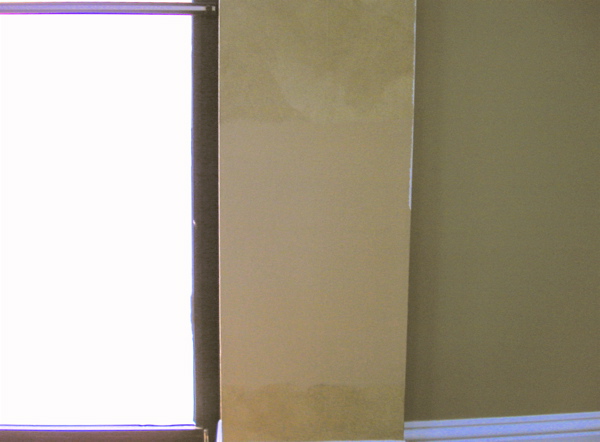
| Painter tested out new color for walls on faux finish....argh! |
Sometimes it is actually easier to faux finish a whole wall over again than it is to patch an area. The reason is that the edges tend to look harsh and you can see where the wall was patched up. However, to paint these columns all over again would take time. To make matters more challenging, I didn't have the original paint that I had used to mix my glaze, either. The reason being was that I had done the faux finishing many years ago, when I didn't do very much faux painting. Another person was in charge of the project and they bought the paint to mix the glaze and neither of us wrote the color down.
Well, praise God, after praying (which is the Most Important Faux Painting Tip) and relying on the wisdom I received, I am so happy to say that I believe the patch work was a success. The pastor was very pleased and most cannot tell that there was any fixing done in the first place.
Next, I mixed my glaze and after pressing the poofy pad onto the palette, I pounced the color on the base coat, carefully blending the edges as best as possible.
It did one more layer of glaze to get the right intensity. I did have to add just a tad of another color on top to get the perfect color. It took less time than I expected.
 |
| Finished patch of Old World Faux |
There was a total of 3 columns that I had to fix and I have included before and after picture of 2 of the columns I had to patch up. As you can see, the match was very close. Pictures never do justice and I have to admit that in person, the patch work looks very similar to the original Old World Parchment I did.


No comments:
Post a Comment